Features
Platform Functions and Capabilities
Scifeon is a modular platform that combines ELN, LIMS, workflow automation and data reporting in one system. Below you’ll find a breakdown of core platform features, grouped by functionality.
Get a demo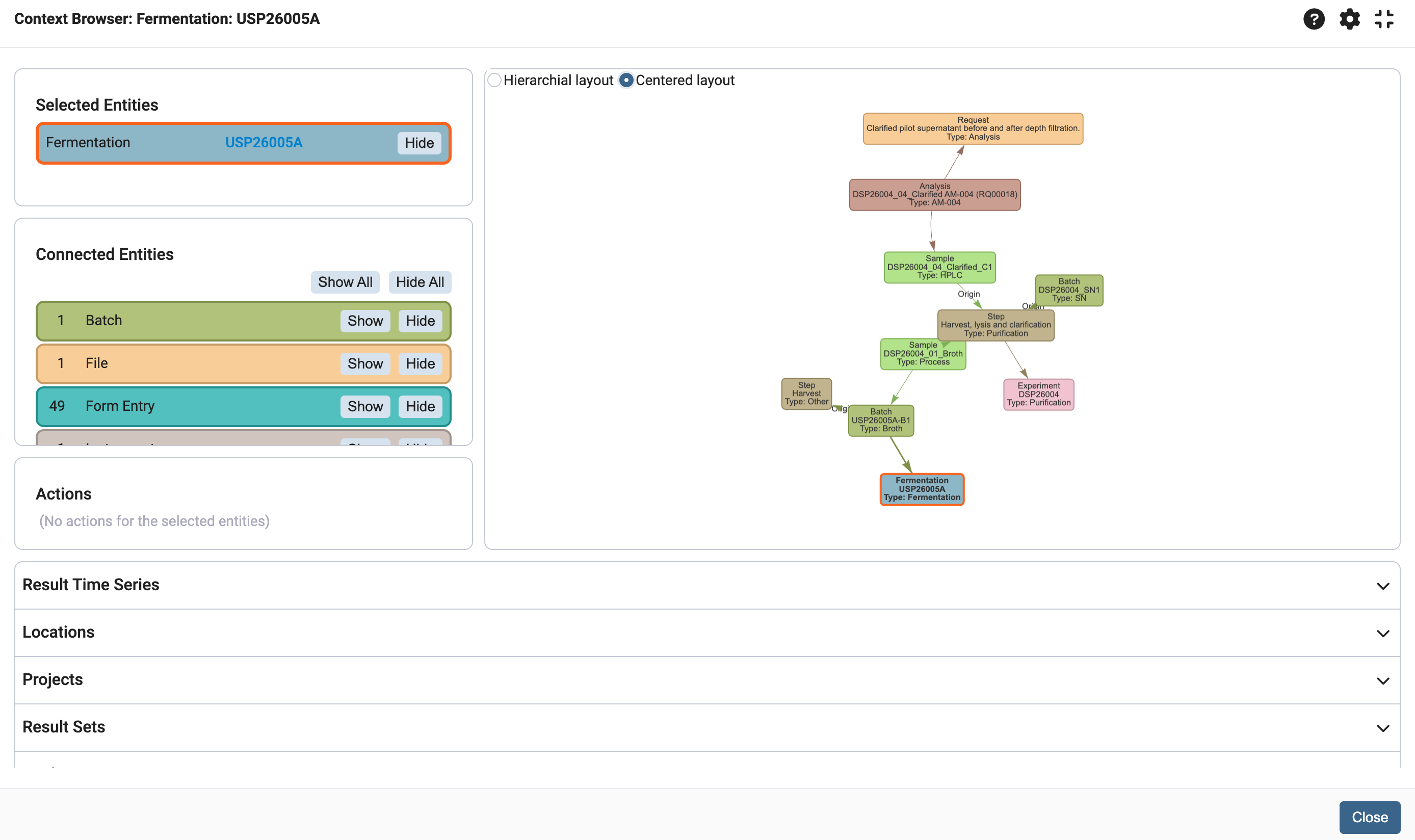
Functionality Overview
One platform, four areas of functionality
Electronic Lab Notebook (ELN)
For structured experiment documentation, SOP management, and collaboration in research and process labs:
- Structured data entry with fully configurable templates
- Version-controlled SOP management and digital records
- Experiment tracking with complete edit history
- Notes, attachments, and annotations per entry
- Built-in calculation tools for dilutions and curve fitting
- Plate-based workflows, e.g. cherry picking and assay mapping
- Digital signoff and approval routing
- Collaboration and commenting at record level
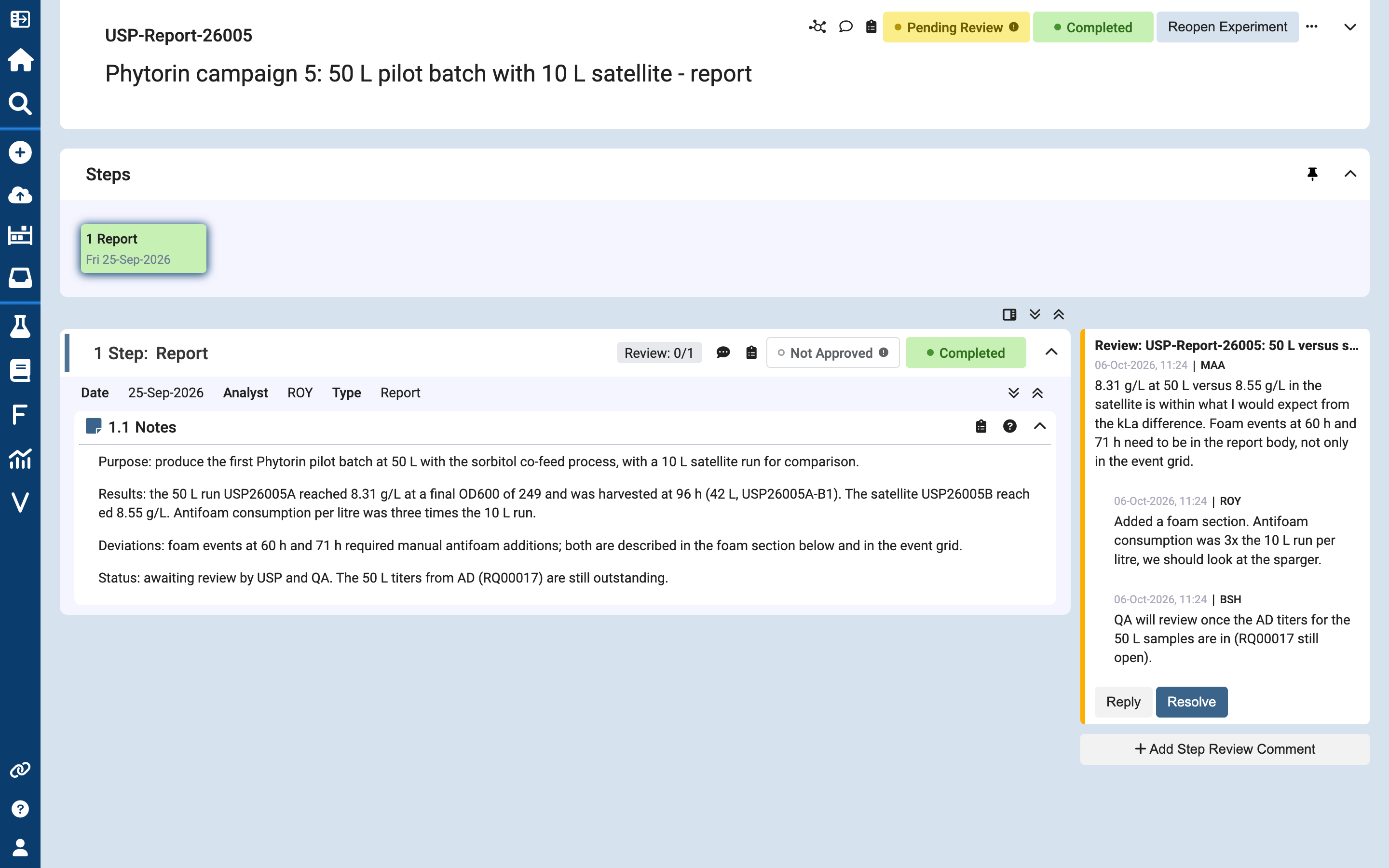
LIMS Functionality
For managing samples, batches, and inventory in QC and regulated environments:
- Sample registration with automatic barcode generation
- Compound, plate, lot, and batch tracking across workflows
- Material and reagent inventory with expiry monitoring
- Batch recipe management with density calculations
- Label printing with configurable templates
- Result entry templates per test type
- Configurable test plans and analysis protocols
- Full traceability with role-based access control
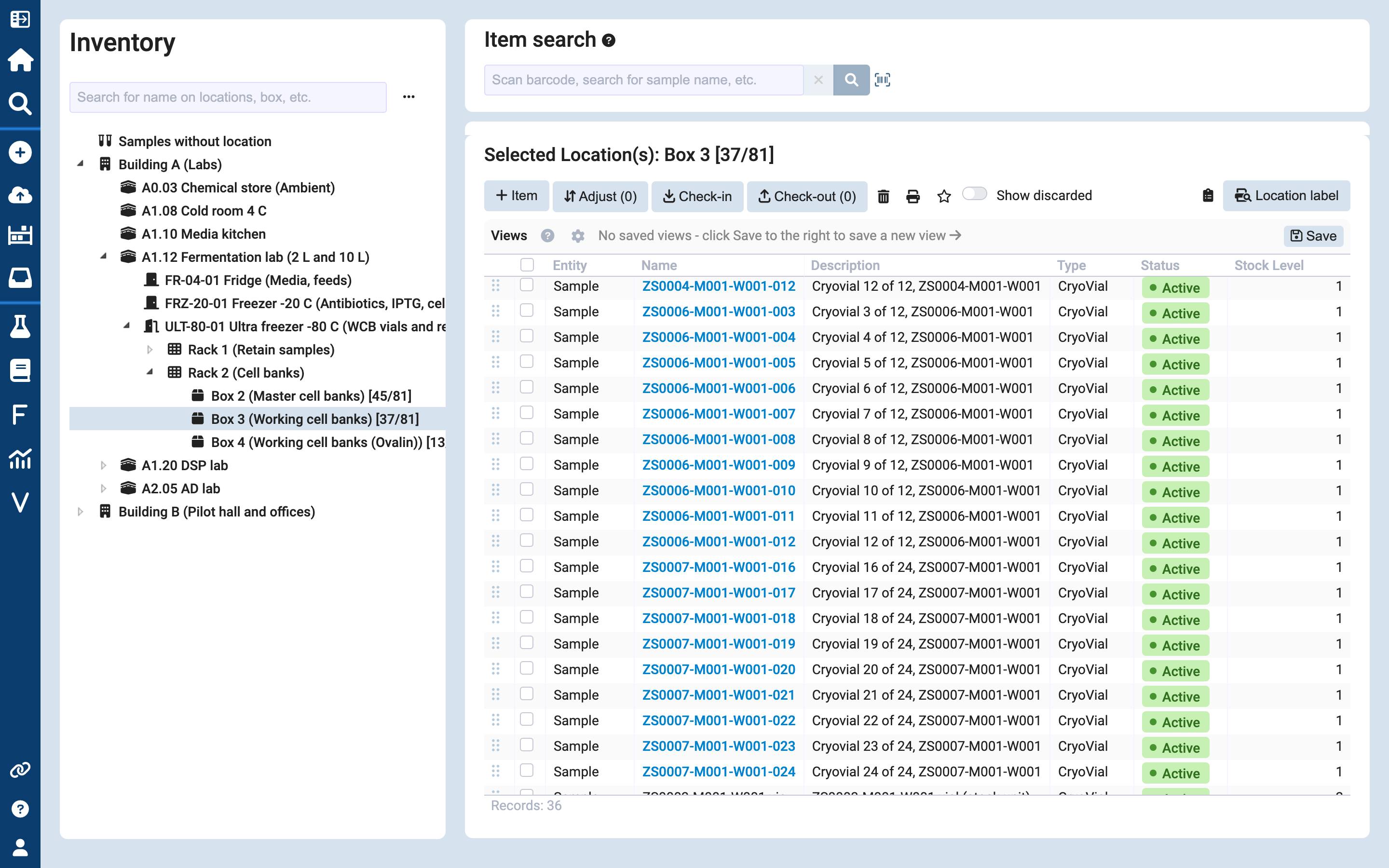
Workflow Automation
For digitalizing handoffs, approvals, and recurring laboratory routines:
- Request creation and routing, e.g. from QA to laboratory teams
- Status tracking per sample, step, or process
- Automated notifications and action triggers
- Integration with instruments and file systems via APIs and file watchers
- Dashboard-based process control and monitoring
- SOP-driven conditional workflows
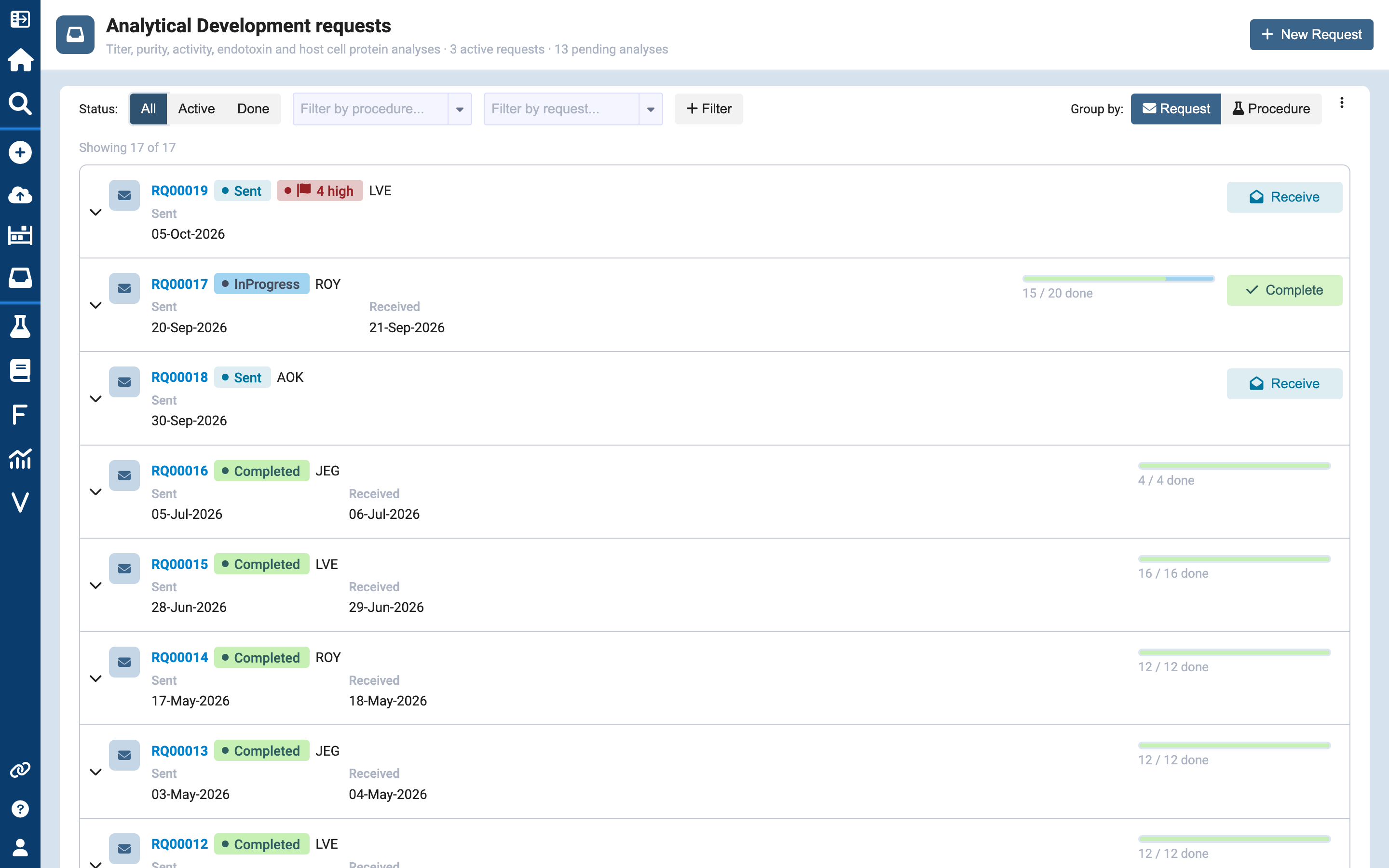
Reporting and Laboratory Data Management
For handling, visualizing, and sharing lab data across experiments and teams:
- Spreadsheet-like data views for intuitive data navigation
- Custom reports with embedded calculations
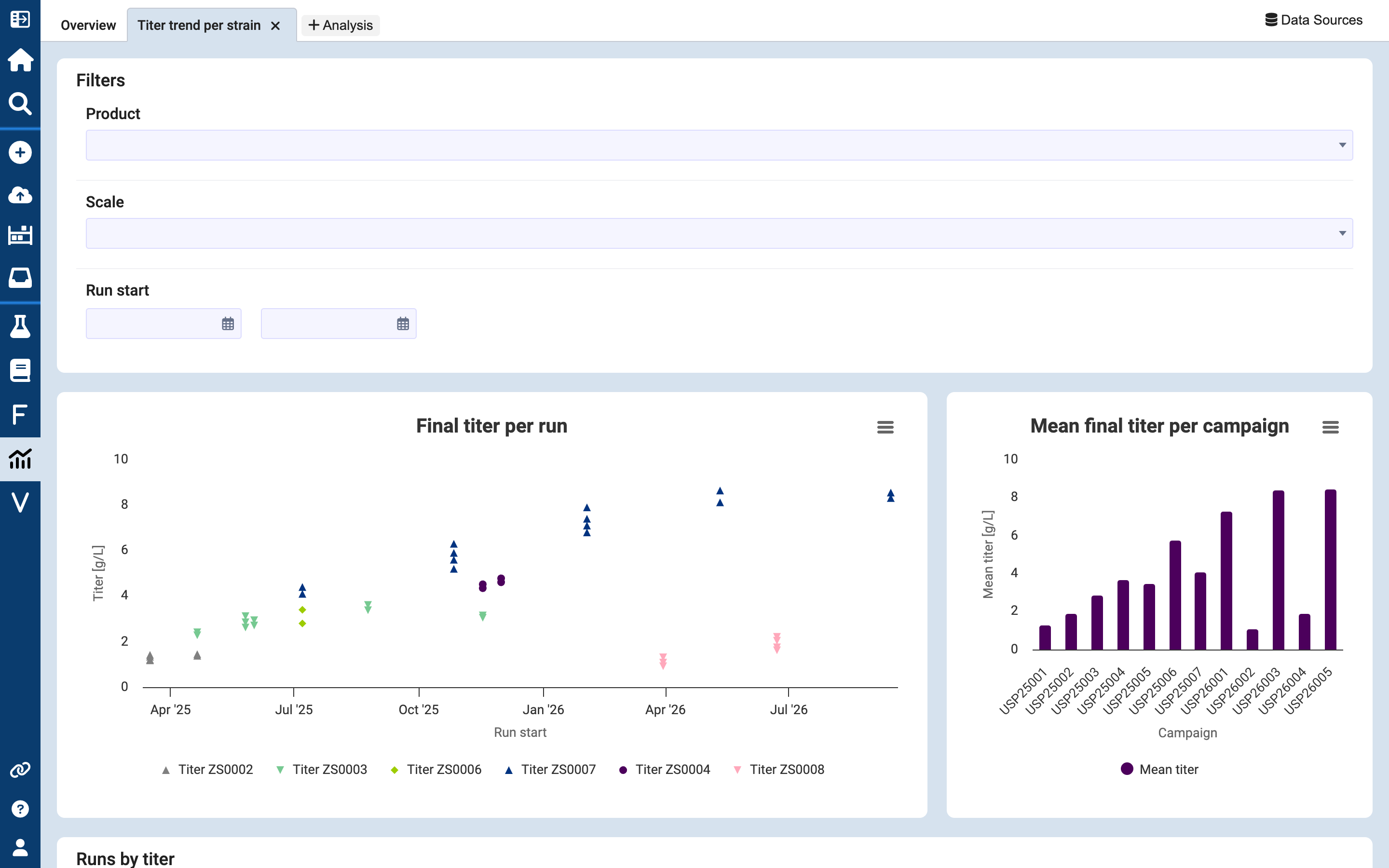
- Real-time dashboards and interactive charts
- Audit-ready data export for regulatory compliance
- Automated PDF and table report generation
- Integration-ready output formats, including CSV, JSON, and XML
Frequently Asked Questions
Short answers to what labs ask most before choosing an ELN and LIMS.
What’s the difference between an ELN and a LIMS, and why does Scifeon combine both?
ELNs focus on experiment documentation and flexible collaboration, while LIMS manage sample tracking, workflows, and compliance. Scifeon integrates both into a single modular platform so labs avoid switching systems and can scale without redesigning their data infrastructure.
How fast can Scifeon deliver measurable results?
Scifeon uses a pilot-first implementation model, showing results early. At EvodiaBio, researchers achieved a 50% productivity increase after just six weeks by focusing on specific workflows first rather than big-bang deployments.
Is Scifeon cost-effective compared to traditional LIMS or ELN systems?
Yes. Scifeon avoids long, high-cost rollouts by starting with a focused pilot and gradually extending modules as needs grow. This reduces upfront costs and accelerates ROI, making it suitable for startups, scale-ups, and established labs alike.
Can Scifeon support both R&D and QC labs?
Yes. Scifeon adapts to different environments:
- R&D teams use it as an ELN for experiment design, data capture, and collaboration.
- QC labs leverage LIMS features like sample registration, batch tracking, and audit-ready reporting.
Because modules are configurable and interoperable, one platform serves both contexts.
Does Scifeon integrate easily with instruments and ERP systems?
Yes. Scifeon connects via APIs and file watchers, enabling smooth data flow from lab instruments, ERP/MES systems, and analytics tools. This removes manual data transcription, speeds up reporting, and improves traceability.
How does Scifeon handle workflow automation?
Scifeon digitalizes handoffs, approvals, and recurring processes through configurable SOP-driven workflows. Requests, notifications, and instrument data are routed automatically, reducing administrative overhead and enabling faster decision cycles.